
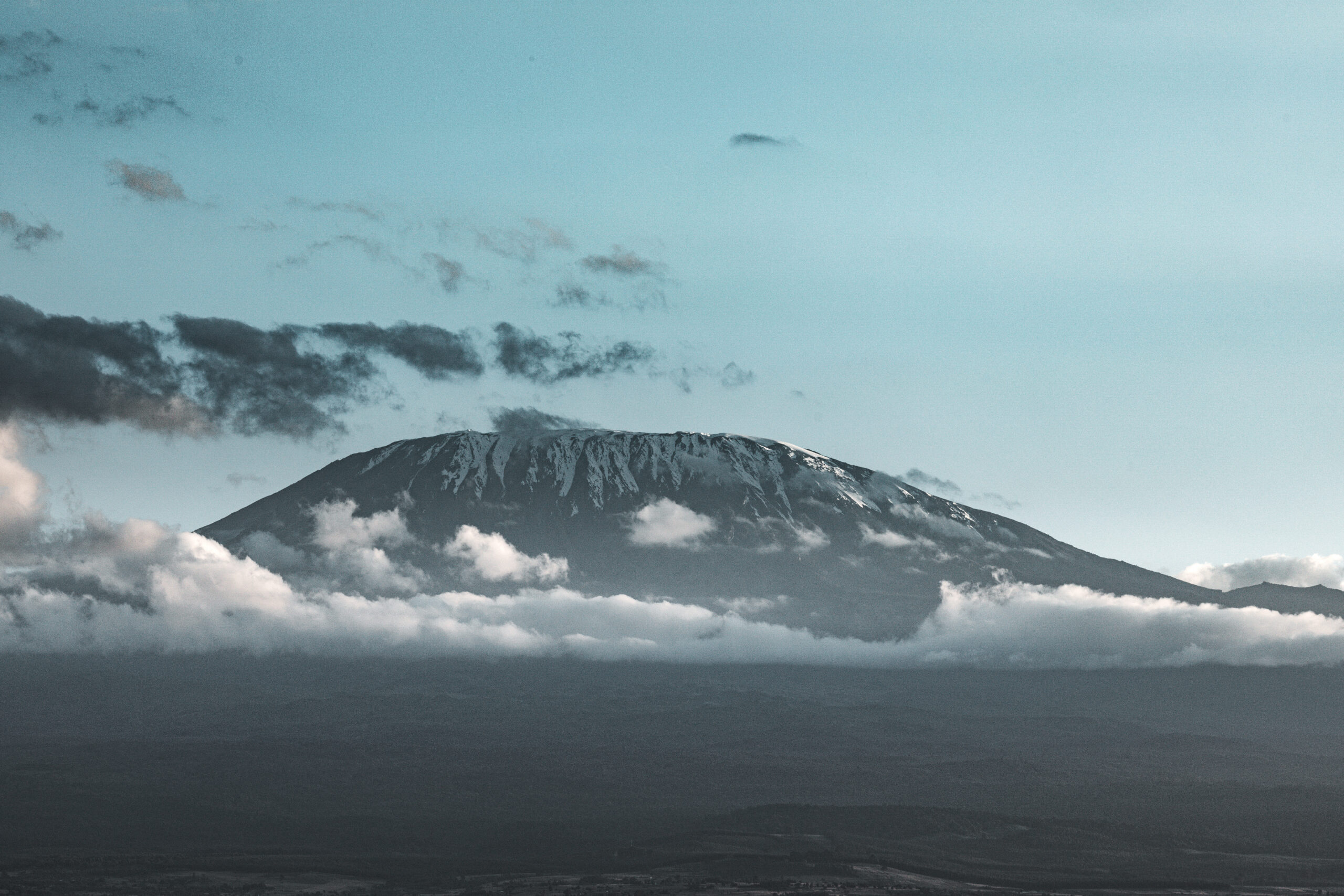
Kilimanjaro is the tallest freestanding mountain on Earth — 5,895 meters (19,341 feet) of volcanic rock, glacial ice, and five distinct climate zones between the gate and the summit. You don’t need ropes, crampons, or mountaineering experience to climb it. You do need the right route, enough days, and a team that knows the mountain.
We’ve been guiding climbers from our base in Arusha since 2015. This is what we tell every person who asks us how to climb Kilimanjaro — the honest version, not the brochure.
The six routes (and which one to pick)
Kilimanjaro has six established climbing routes. They all end at Uhuru Peak. The difference is how you get there — and that difference determines your summit success rate more than your fitness level does.
Marangu (5–6 days)
The only route with hut accommodation instead of tents. Often called the “Coca-Cola route.” Sounds appealing — but it has the lowest summit success rate of any route (~65%) because most operators run it in 5 days, which isn’t enough time to acclimatize. The ascent and descent use the same path, so there’s no variety in scenery. We don’t recommend it.
Best for: Climbers who strongly prefer sleeping in huts over tents. Nobody else.
Machame (6–7 days)
The most popular route on the mountain, and for good reason. Scenic, varied terrain, and a “climb high, sleep low” profile that helps acclimatization. The 7-day version has an ~85% summit success rate. The famous Barranco Wall scramble on day 4 is the highlight — steep but not technical, and the views from the top are the best on the mountain.
Best for: First-time climbers who want a well-proven route with strong scenery.
Lemosho (7–8 days)
Starts from the remote western side through pristine rainforest. Less crowded than Machame for the first two days, then merges onto the same path. The 8-day version has a ~90% summit success rate — the extra day makes a real difference. This is the route we recommend most often.
Best for: Climbers who want the highest realistic success rate and don’t mind an extra day. Our top recommendation.
Rongai (6–7 days)
The only route that approaches from the north (Kenya side). Drier conditions, gentler gradient, and far fewer climbers. Less scenic than Machame or Lemosho — the northern slopes are more arid. Descends via Marangu, so you see two sides of the mountain.
Best for: Climbers going during the rainy season (Rongai stays drier), or anyone who wants solitude.
Northern Circuit (9 days)
The longest route, circumnavigating the mountain nearly 360 degrees before the summit push. Highest success rate of any route (~95%) because you spend more days acclimatizing. The trade-off is time and cost — 9 days on the mountain is a serious commitment.
Best for: Climbers with the time and budget to maximize their summit chances.
Umbwe (5–6 days)
The steepest, most direct route. Beautiful in a brutal way — dense forest, steep ridgelines, and a relentless vertical gain. The lowest success rate (~60%) and the highest difficulty. Not recommended for first-timers.
Best for: Experienced high-altitude trekkers who want a physical challenge.
Quick comparison
| Route | Days | Success Rate | Difficulty | Scenery | Traffic |
|---|---|---|---|---|---|
| Marangu | 5–6 | ~65% | Moderate | Low | High |
| Machame | 6–7 | ~85% | Moderate-hard | High | High |
| Lemosho | 7–8 | ~90% | Moderate | Very high | Medium |
| Rongai | 6–7 | ~80% | Moderate | Medium | Low |
| Northern Circuit | 9 | ~95% | Moderate | Very high | Low |
| Umbwe | 5–6 | ~60% | Hard | High | Very low |
Our recommendation: Lemosho 8-day for most climbers. Machame 7-day if you’re on a tighter schedule. Northern Circuit if you want the absolute best odds and have the time.
How hard is it, honestly?
Kilimanjaro is not a technical climb. There are no ropes, no harnesses, no crevasse crossings. You walk. For days. Uphill.
The difficulty is almost entirely altitude-related. Above 4,000m, your body starts running low on oxygen. Above 5,000m (the summit push), you’re at roughly half the oxygen you breathe at sea level. This is where fitness matters less than acclimatization and pacing.
What makes it hard:
- The summit night push starts around midnight and takes 6–8 hours in the dark, in sub-zero temperatures, at extreme altitude. This is the hardest part by far.
- Altitude sickness can hit anyone regardless of fitness. There’s no way to predict susceptibility without going high.
- The cumulative fatigue of 6–8 days of walking at altitude wears you down more than any single day.
What makes it manageable:
- The pace is slow — deliberately slow. “Pole pole” (Swahili for “slowly, slowly”) is the guiding philosophy. If you can walk uphill for 6 hours at a conversational pace, you have the base fitness.
- Your crew carries everything. You carry only a daypack with water, snacks, and layers.
- Every reputable operator carries supplemental oxygen and a pulse oximeter. If your oxygen saturation drops dangerously, you descend. Safety protocols are well-established.
Turn-back rate: Roughly 35% of climbers on 5-day routes fail to summit. On 7–8 day routes, that drops to 10–15%. The single biggest factor in success is spending enough days on the mountain — which means picking the right route and not cutting days to save money.
Training: what actually helps
You don’t need to train like a mountaineer. You do need to be in reasonable cardiovascular shape and comfortable walking for extended periods.
3–4 months before your climb
- Walk uphill. Stairs, hills, inclined treadmill — 45–60 minutes, 3–4 times per week. This is the single most useful exercise.
- Build leg endurance. Squats, lunges, step-ups. Your quads and calves do the most work.
- Cardio base. Running, cycling, swimming — anything that keeps your heart rate elevated for 45+ minutes.
- Back-to-back days. Once a week, do two long walk days in a row to simulate the cumulative fatigue.
1 month before
- One long hike per week (4–6 hours) with a loaded daypack (5–8 kg).
- If you can access altitude, even a weekend trip to a high-altitude location helps your body learn to produce red blood cells faster.
What doesn’t help much: Gym machines, heavy weightlifting, sprint intervals. Kilimanjaro is an endurance event, not a power event. Train for duration, not intensity.
Honest assessment: If you can hike uphill for 5–6 hours carrying a light pack without stopping every 10 minutes, you’re fit enough. Most of our successful climbers are regular walkers and hikers, not athletes.
What to expect: day by day
Every route is different, but the general pattern on a 7–8 day climb looks like this:
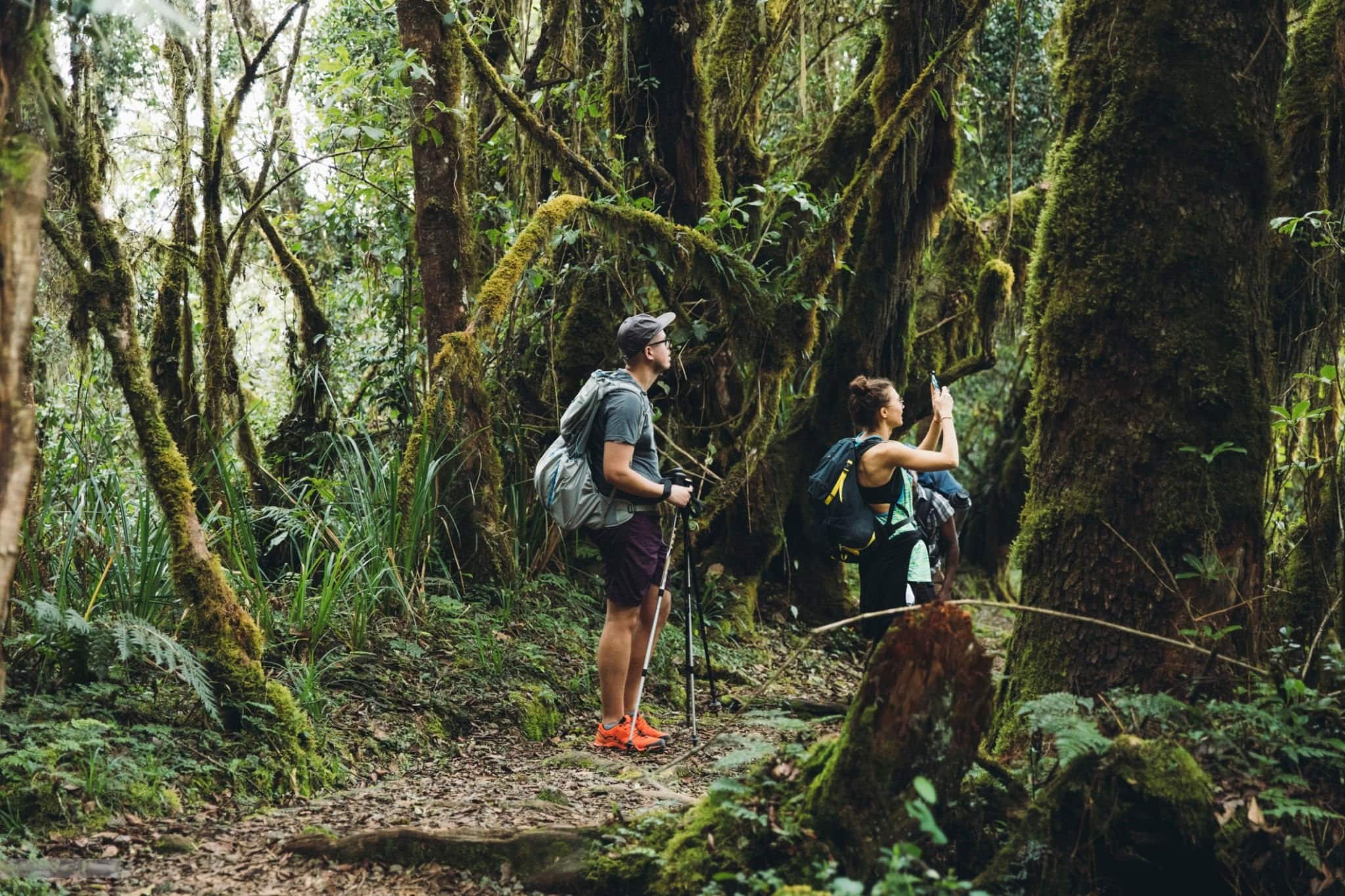
Day 1 — Rainforest (1,800m to 2,800m)
Warm, humid, muddy. Dense forest with monkeys and birds. You’ll think “this is easy.” It is. Enjoy it.
Days 2–3 — Moorland and heath (2,800m to 3,800m)
The trees thin out. Giant heather and lobelias. The temperature drops noticeably. First mild altitude effects — slight headache, faster breathing. Drink water constantly.
Days 4–5 — Alpine desert (3,800m to 4,600m)
Barren, rocky, otherworldly. The air is thin and dry. The landscape looks like Mars. You walk slowly. Rest days or “climb high, sleep low” days happen here — these are the days that make or break your summit bid.
Day 6 or 7 — Summit push (4,600m to 5,895m)
Start at midnight. Headlamps on. Sub-zero cold (-15 to -20°C at the summit). Switchbacks up scree for 6–7 hours to Stella Point (5,756m) on the crater rim. Then another 45 minutes along the rim to Uhuru Peak. Sunrise from the roof of Africa. Descend the same day to a lower camp — the altitude drop brings immediate relief.
Final day — Descent
Fast walk down through the forest. Sign out at the gate. Drive back to Arusha. Hot shower. Cold beer. Certificate.
When to climb
Kilimanjaro is climbable year-round, but two seasons stand out:
Best months: January–March and June–October
- January–March: Post-short-rains. Generally clear skies, slightly fewer climbers than peak season. Cold at the summit but stable weather.
- June–October: Dry season. The most popular window. Cold and dry — best visibility, lowest precipitation risk. July–August is the busiest period.
Avoid if possible: April–May (long rains — trails are muddy, clouds obscure views, some operators reduce departures) and November (short rains — unpredictable weather).
Pro tip: If you’re combining Kilimanjaro with a safari (and you should — you’re already in Tanzania), climb first. You’ll be tired after the mountain, and a few days of game drives in a vehicle is the perfect recovery.
What it costs
A Kilimanjaro climb through a reputable operator in Arusha ranges from $2,500 to $7,000+ per person, depending on route, duration, and group size.
What drives the price:
- Park fees alone are $1,000–1,200 per climber (paid directly to Tanzania National Parks Authority). This is non-negotiable and identical for every operator.
- Route and days: Longer routes cost more (more staff days, more food, more camp fees).
- Group vs private: Joining an open group is cheaper. Private climbs cost more but you set the pace.
- Operator quality: The gap between a $2,000 climb and a $5,000+ climb is crew wages, equipment quality, safety protocols, and food. The mountain doesn’t change — the experience does.
What’s included in our climbs: Professional guides (KINAPA-certified), porters, cook, all meals on the mountain, camping equipment (4-season tents, sleeping bags, mattresses), park fees, rescue fees, transfers from Arusha, and pre-climb briefing. Full breakdown on our tours page.
What’s not included: International flights, travel insurance (mandatory — must cover high-altitude evacuation to at least $50,000), personal gear, tips for crew, hotel nights before/after the climb.
Our Kilimanjaro climbs start from $6,500 per person for a 7-day Machame or Lemosho route, private climb. This includes everything above. We don’t run budget climbs — our porters are paid fairly, our safety equipment is current, and our guides have 10+ years on the mountain.
See our full pricing and what’s included: Tanzania Safari Packages
Gear: what you actually need
We provide all camping and group equipment. You bring personal clothing and gear. The short list:
- Boots: Broken-in waterproof hiking boots with ankle support. This is the one item you cannot compromise on. Buy them 2–3 months early and walk 50+ km in them before the climb.
- Layers: Base layer (merino or synthetic), mid-layer fleece, insulated jacket (down or synthetic, rated to -15°C), waterproof shell.
- Pants: Hiking pants + waterproof over-pants for summit night.
- Headwear: Warm beanie, sun hat, balaclava or buff for summit night.
- Gloves: Liner gloves + insulated outer gloves. Your hands get cold fast above 5,000m.
- Daypack: 25–35L, rain cover included.
- Headlamp: With fresh batteries and a spare set. Summit night is 7+ hours in the dark.
- Water: 3L capacity (hydration bladder or bottles). Bladder hoses freeze above 5,000m — keep bottles inside your jacket.
- Trekking poles: Highly recommended. Save your knees on the descent.
We send a complete, detailed gear list to every booked climber. If you’re also doing a safari, check our Tanzania packing list for the safari portion.
Why climb with us
We’re based in Arusha — 90 minutes from the Kilimanjaro gates. We’ve been guiding this mountain since 2015.
- Small groups, private climbs. We don’t pack 40 people onto the mountain. Our standard is private climbs for your group only, with a dedicated guide team.
- Fair porter wages. Our porters earn above the Kilimanjaro Porters Assistance Project (KPAP) recommended wage. We are KPAP partner-compliant.
- Safety-first protocols. Pulse oximeters checked twice daily. Emergency oxygen on every climb. Certified Wilderness First Responders on the guide team. Clear descent protocols — no one pushes past safe limits for a summit photo.
- Combine with safari. Most of our climbers add a 3–7 day safari before or after the climb. We handle everything — one operator, one booking, seamless logistics. See our 7-day safari itinerary for what that looks like.
- 10 years, 1,200+ guests. 98% of our clients come from referrals or return trips. That number is our real marketing.
Ready to climb Kilimanjaro?
Browse our Kilimanjaro packages — we offer 6 to 12-day climbs on Machame, Lemosho, Rongai, and Northern Circuit routes. Every climb includes a pre-trip consultation where we help you pick the right route based on your fitness, schedule, and goals.
Or send us your preferred dates and we’ll come back with a tailored quote and route recommendation within 24 hours.